Thursday, 5 May 2011
X- RAY Images
Today, art historians routinely use x-rays to see beneath the finished surface of paintings. Caravaggio's 17th century masterpiece "Adoration Of The Sheperds" reveal rough sketches of 'under drawing' and discover changes that the artist made during the painting process. I attempted to recreate my own x-ray images, I layered two drawings on top of one another to give the impression that there were underlayers. To ensure the under layer came through, I used a lightbox. I like the depth this technique created, giving my photo a dimensional quality. It mergerd shape and line together, boosting the photos visula impact.Research And Response
'Phantom Recorder' - when a limb is lost, the mind often develops a phantom senstaion. Thhe Pahntom Recorder sytem projects a cold and damp sensation onto the skin surface, triggering the brain to halluncinate a phantom. The recorder allows the nerves to recreate the sensation of the telescoped phantom hand, the fourth feet or the split arm.


These are a response to the Pahntom Recorder photo. I stumbled across the Phantom Recorder in a magazine and thought it had relevance to my project. I was interested in amputation and wether there was sensation in the arm socket when the arm had been lost. Visually, i liked how the photo projected an eerie quality. the limb being replaced with a glass bubble contributes to the distorted disfigurment the body already holds.


These are a response to the Pahntom Recorder photo. I stumbled across the Phantom Recorder in a magazine and thought it had relevance to my project. I was interested in amputation and wether there was sensation in the arm socket when the arm had been lost. Visually, i liked how the photo projected an eerie quality. the limb being replaced with a glass bubble contributes to the distorted disfigurment the body already holds.
My Detailed Drawing Inspired By Erwin Wurm
Erwin Wurm

My own photo

This Photo was inspired by Erwin Wurms work. I was interested with the idea of manipulating the body to create something quite surreal. Erwin Wurms work presents a series of shots showing bizarre forms that we gradually realize are human bodies, twisted and tangled in thier completely non functional clothing.


This Photo was inspired by Erwin Wurms work. I was interested with the idea of manipulating the body to create something quite surreal. Erwin Wurms work presents a series of shots showing bizarre forms that we gradually realize are human bodies, twisted and tangled in thier completely non functional clothing.
Tracy Emin And Louise Bourgeious
Tracy Emin and Louise Bourgeious 'pregnant belly'
I visually responded to 'the pregnant belly' with water colour and ink. i was interested in how the body functions and how pregnancy conencides with the Lunar months. I was suprised to find out the the female body clock relies on the moonlight to regulate the menstrual system. I was intrested in exploring a functioning body in juxtapostion with my other artists who portaryed images of dysfunctional bodies.
Zhang Dali
I tried to recreate the hanging body effect. In these photos I have covered the face in a black jumper to insinuate the lack of ackknowledgement immigrant workers get. Hanging the bodys form rope reflects the lack of control we all have in our current society . According to Zhang Dali these people represent the immigrant workers in rural areas of china. To cast them in resin is a way to recognize thier existence and contribution to the chinese society.
I like how he hangs the immigrant workers upside down to indicate the uncertainty of thier lives and thier powerlessness in changing thier own fates.
Zhang Dali Chinese Offspring ( 2003)
I like how he hangs the immigrant workers upside down to indicate the uncertainty of thier lives and thier powerlessness in changing thier own fates.
Associative Writing
My photos are a response to Hans Bellmer's distorted figures. I created a doll like clay sculpture with exaggerated limbs and growths forming externally, particualary through the arm sockets.
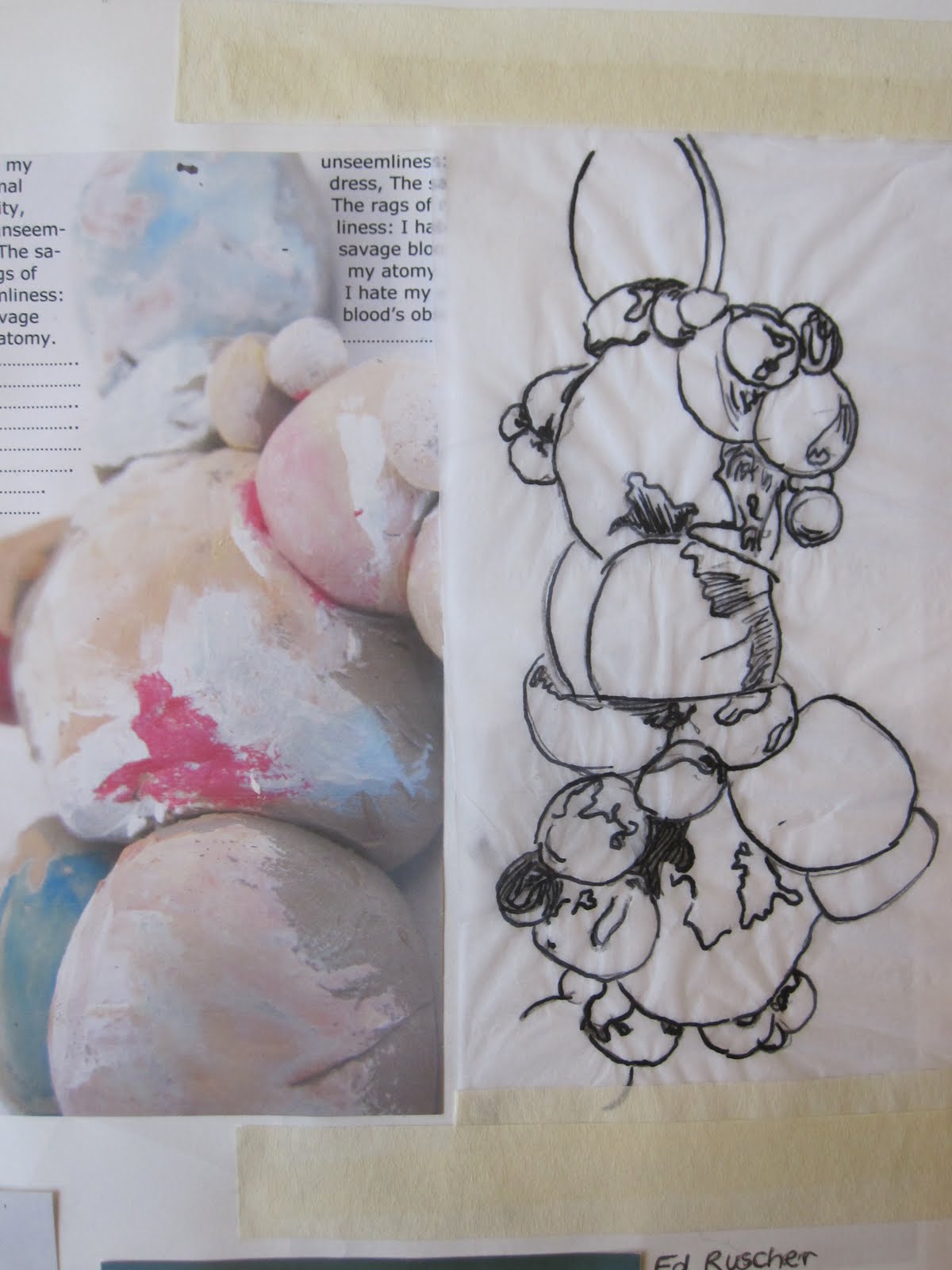
Barbara Kruger, Jenny Holzer and Ed Ruscher are artists that inspired the idea to work on top of photos. Text enhances a photo' intentions, manipulating the audiences reaction, ensuring that the artist achieves the desired effect.
I really enjoyed this task and felt it helped to develop my own understanding of my photos.

Barbara Kruger, Jenny Holzer and Ed Ruscher are artists that inspired the idea to work on top of photos. Text enhances a photo' intentions, manipulating the audiences reaction, ensuring that the artist achieves the desired effect.
I really enjoyed this task and felt it helped to develop my own understanding of my photos.

Project 4 : Hans Bellmer
Hans Bellmer ' La poupee' ( the doll) 1935

My detailed painting in response to Hans Bellmer.
Photo response and visual annotations.

Photo response and visual annotations.
Hans Bellmer inspired my photos. I emphasised body parts, bulking out joints. This gave the photos a distorted quality, creating a similar Hans Belmmer doll like feel to the photos.
Hans Bellmer constructs surreal doll like sculptures, with a perverse sexual twist, with explicit body parts on show. His dolls are a symbol of childhood, feminity, sexual fanatsy and political victimisation. His dolls, with thier distorted bodys have an eery quality. The deformed limbs and extra body parts give off a sense of surrealism.
Rachel Whiteread Response
Rachel Whiteread 'Building Blocks'

My response using air drying clay. I Have inprinted everyday objects onto the surface of the clay.


Rachel Whiteread states "one doesn't see the object, only the air that surrounds it". I like the idea of focusing on the space that surrounds and object in comparison with artists who solely focus on how objects invade space. Whitereads work is inspirational because she is able to manipulate space without entirely filling the space.


Rachel Whiteread states "one doesn't see the object, only the air that surrounds it". I like the idea of focusing on the space that surrounds and object in comparison with artists who solely focus on how objects invade space. Whitereads work is inspirational because she is able to manipulate space without entirely filling the space.
Reasearch into different peoples perceptions to space.
Ernesto Neto
My response to Enesto Netos 'Circleproteitemple'. I am ineterested spatial dynamics. How spatial alterations transform the relationship between people. i ws particualry ineterested in Ernesto Netos work. I like his intention of bringing people together, stimulating interaction. He encourages people to interact with his work, making them active participants in the art work.

Wednesday, 4 May 2011
Lynda Benglis
Here I have my detailed drawing and painting and a polyfiller experimentation. The texture and compostion of these pieces was inspired by Lynday Benglis. When I went to the Tate Modern, I went to the 'Energy And Process' Exibition. The display looks at artists interest in transformation and natural forces. I was drawn to Lynday Benglis 'Quaurtered Metor' placed in the corner of the gallery space . This piece has been transformed from foamy globs into solid masses of metal. I love the way the lead folds over itself, forming clumps of smoothness. In my opinion it has the resembelance to cooled lava , it also projects a sense of movemnt, with the impression that the lava is flowing downwards.

Victor Pasmore
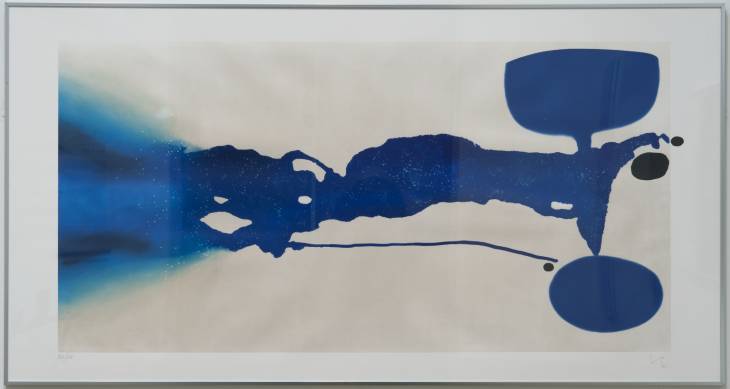
Victor pasmore 'Stromboli' Original image.


I visted Tate Moderns collection and came across Victore Pasmore. I was drawn to his piece named 'Stromboli', which in my opinion had resembelance to flowing water. he achieves fluidity and movement in this piece with his skillful printing technique. In response to this i have tried to recreate the same movement. I have experimented with oil and water and have photographed it and i have also worked with balsamic vinegar and oil on card. i found that the oil seperated from both liquid forms and created this beautiful flowing effect. i loved the way that every time you jogeed the liquid form, new shape would appear and alter.


I visted Tate Moderns collection and came across Victore Pasmore. I was drawn to his piece named 'Stromboli', which in my opinion had resembelance to flowing water. he achieves fluidity and movement in this piece with his skillful printing technique. In response to this i have tried to recreate the same movement. I have experimented with oil and water and have photographed it and i have also worked with balsamic vinegar and oil on card. i found that the oil seperated from both liquid forms and created this beautiful flowing effect. i loved the way that every time you jogeed the liquid form, new shape would appear and alter.
Wednesday, 9 December 2009

Space
The space in two-dimensional artworks such as paintings, drawings, prints and photographs (flat space) is essentially limited to height and width. While there is no actual depth or distance in such works, artists have created techniques to create the illusion of depth or distance on these flat surfaces. The following represents some of those techniques:
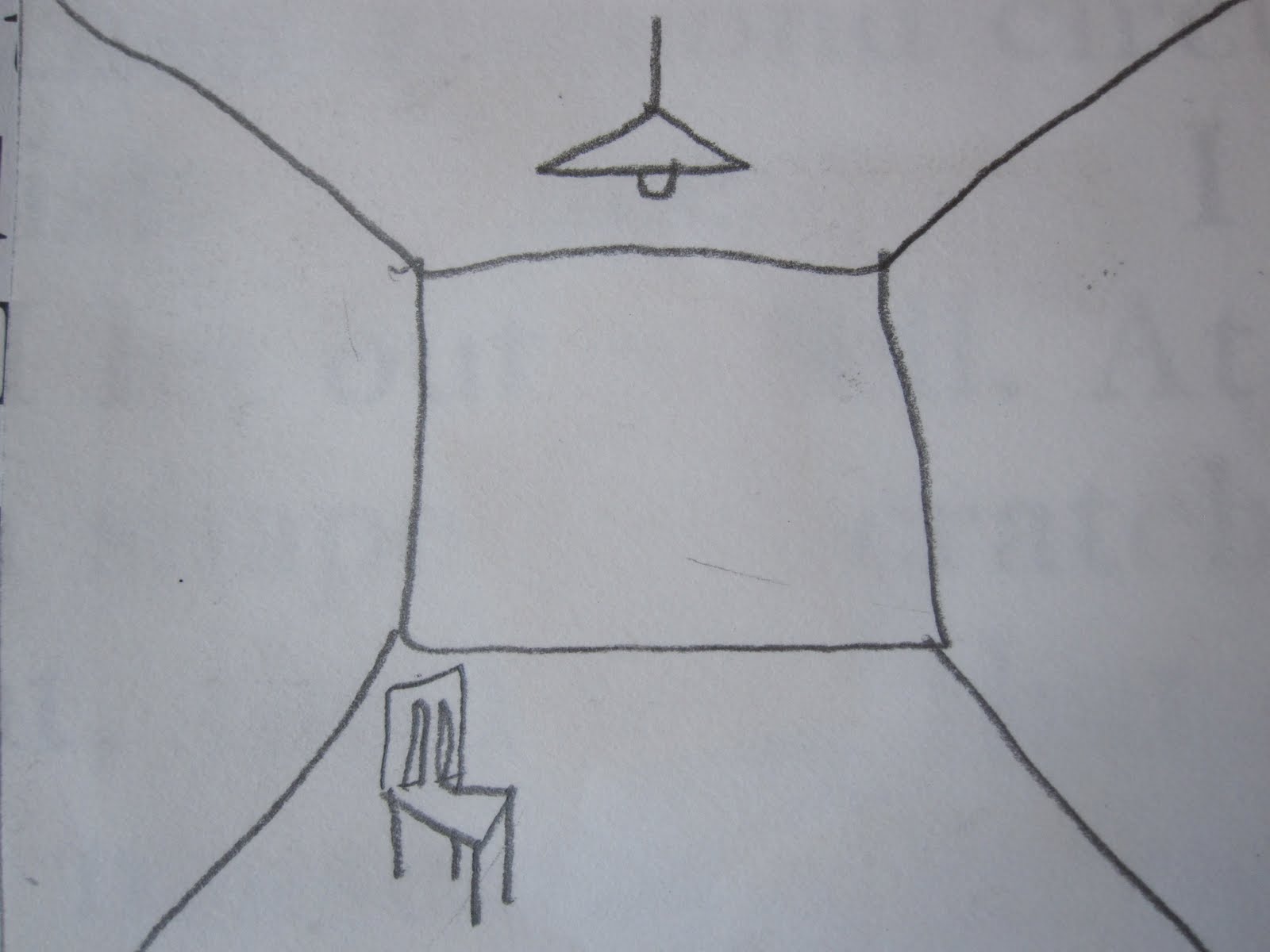
The most prominent of these techniques is the application of linear perspective. Through this application distant objects are rendered proportionately smaller than closer ones. The determining factors of this space depends upon the horizon line and vanishing point.
Form
Form can be described as a three
dimesional solid of contained space.
In this example form has both mass
and volume whereas shape has only mass.
Form helps to build sculptures and detremines thier shape.
When relating it back to my own work, from seems evident within the compositions in my photos.The use of form helps to create dimension, creating successful and intresting photos to work from.

Form can be described as a three
dimesional solid of contained space.
In this example form has both mass
and volume whereas shape has only mass.
Form helps to build sculptures and detremines thier shape.
When relating it back to my own work, from seems evident within the compositions in my photos.The use of form helps to create dimension, creating successful and intresting photos to work from.

Sunday, 6 December 2009
I get this feeling because the lines are slashed across the page in a careless style.
These are my finished drawings taken from my own photos. They took around 12hrs each to complete. I learnt that it is important to spend time on the drawing because it pays of. The amount of time you spend on a drawing determines the quality of work produced. These are photos taken of fabric. I have created photos that have movement and dimension through the way I have chosen to compose it. In my first photo the fabric, which originaly worn as a womens scarf, was draped over a lamp, when the lamp was lit, it highlighted the dark and lights areas within the creases of the fabric, helping to -portray the areas of movement within the photo. I found it interesting the way the fabric hung over the light, it created and interesting visual effect and looked similar to that of melting wax. This photo connected with the idea that fabric can portray diffent substances, thus creating different emotions.
My second photo uses the same fabric but I have created a different compostion. I have tryed to empahsize the creases and folds of the fabric by scrunching the fabric up. I am focusing on the movement that the frabric produces. The creases and folds will empahsize the movement. This photo created new ideas towards my final piece. It pointed me in the direction of composition and they way it chnages the emotion of the piece. I found this intereseting because the use of the same fabric could create completely diffent photos and potray completly diffent emotions.
It is important to produce quality photos because they are easy to work with. A quality photo can be produced by having the right lighting, good compostion and they must be in focus.


My second photo uses the same fabric but I have created a different compostion. I have tryed to empahsize the creases and folds of the fabric by scrunching the fabric up. I am focusing on the movement that the frabric produces. The creases and folds will empahsize the movement. This photo created new ideas towards my final piece. It pointed me in the direction of composition and they way it chnages the emotion of the piece. I found this intereseting because the use of the same fabric could create completely diffent photos and potray completly diffent emotions.
It is important to produce quality photos because they are easy to work with. A quality photo can be produced by having the right lighting, good compostion and they must be in focus.
This is an example of how I have made connections with my still life and artists. This process enables me to highlight areas of the photo that are of most use to me. I have also found textual connections to my still life photo, I have expressed this by adding textured matierals to the page, such as leather. The leather has patterns on it which create movement, the movement is fixed and rigid, this relates to the way the feather looks within this picture, it looks slighlty less soft and has a more rigid look.
These are photos I have taken from the still life, I chose areas that had natural light hitting them because the lights and darks come out more defined in the photo. These photos were taken to give us inspiration and develop our current ideas. In my opinion my photos have resembelance to Fabric. By relating these photos to real life objects, it shows my thoughtracking process and highlights my areas of interest. This process helps me to come up with ideas for my theme. I liked the use of line apparent in both of these photos, the line creates structure. The tonal range is evident giving both photos dimension.
The still life workshop enabled me to experiment with different textures and designs. I explored rough and soft textures. The idea of textures then developed into fabrics, concentrating on the movement of fabric and the patterns they created. I had freedom to express diffent ideas using differnt medias. I used medias such as chalk, charcol and pencil to express areas of interest and enhance areas of definition. I chose fabric as my focal point because I find the movement intresting, the movement potrays different emotions depending on its fluidity and the way it has been composed.
Subscribe to:
Posts (Atom)